Knee Pain in Essex
Specialist Knee Pain Assessment and Treatment in Billericay, Essex
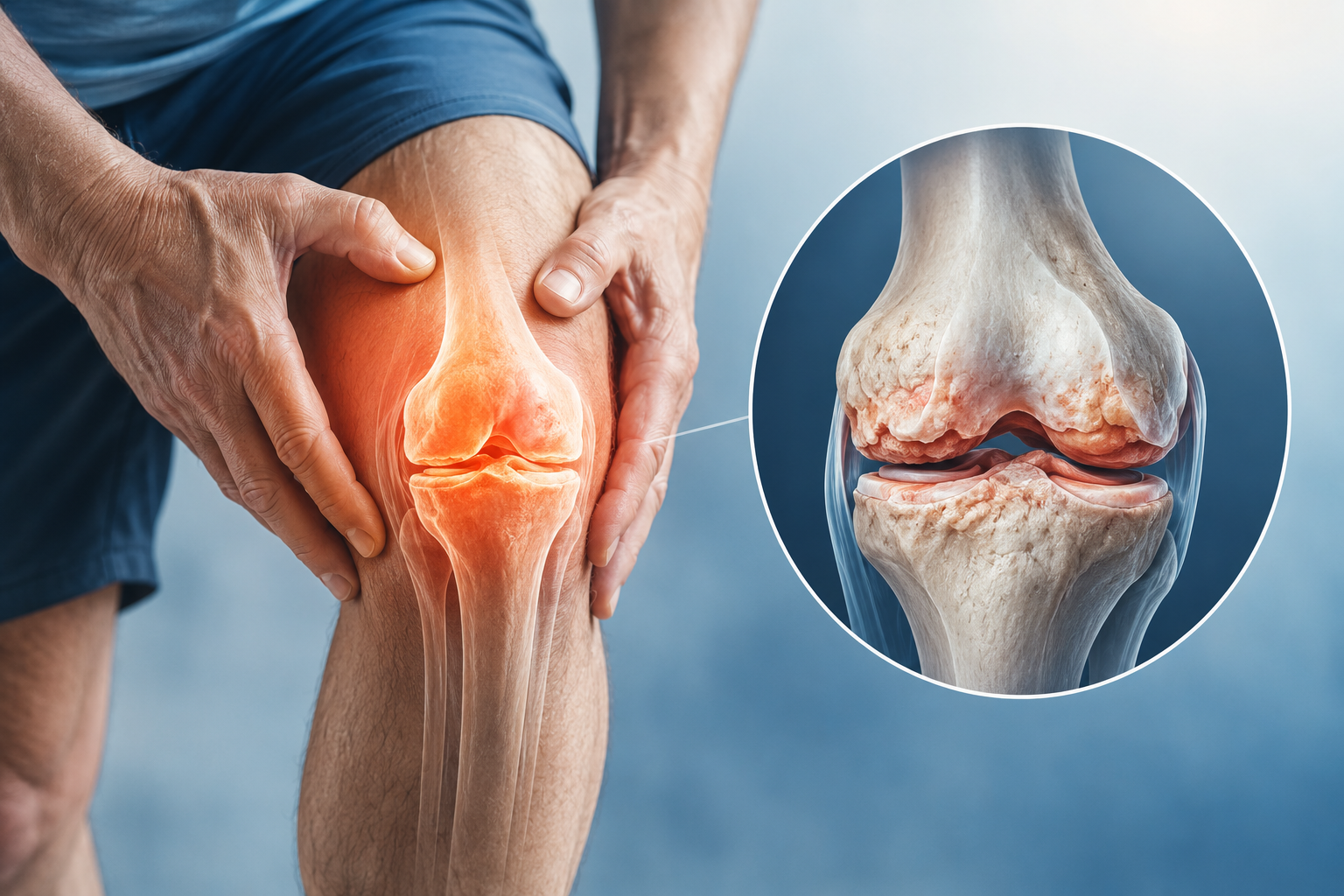
Knee pain is one of the most common musculoskeletal problems and can affect people of all ages. It can develop gradually through osteoarthritis or overuse, or occur suddenly following an injury, twist, fall or sporting activity.
At The Arthritis Clinic in Billericay, Essex, we provide specialist assessment and treatment for a wide range of knee problems. Our approach is focused on identifying the likely cause of your knee pain and developing an individual treatment plan based on your symptoms, clinical findings, activity levels and goals.
Knee pain can arise from many different structures, including the joint, cartilage, meniscus, ligaments, tendons, muscles and surrounding soft tissues. Understanding what is contributing to your symptoms is an important first step towards effective treatment.
What Causes Knee Pain?
There are many potential causes of knee pain. Common problems include:
- Knee osteoarthritis
- Meniscal injuries and degenerative meniscal problems
- Patellofemoral pain
- Patellar tendinopathy
- Ligament injuries
- Tendon injuries
- Bursitis
- Sports and activity-related injuries
- Muscle strains
- Cartilage injuries
- Knee inflammation
- Persistent or recurrent knee pain
- Post-operative knee problems
Knee pain can also occasionally be associated with inflammatory arthritis, gout, infection or other medical conditions. This is why an appropriate clinical assessment is important rather than assuming that every painful knee is simply osteoarthritis.
Knee Osteoarthritis
Osteoarthritis is a common cause of persistent knee pain, particularly with increasing age. Symptoms can include pain during walking or exercise, stiffness, swelling and reduced physical function.
Management does not necessarily mean surgery. Exercise and rehabilitation are important components of osteoarthritis management, and treatment can be tailored according to symptoms, physical function and individual circumstances.
At The Arthritis Clinic, we can provide specialist assessment and discuss a range of conservative treatment options, including:
- Physiotherapy
- Exercise rehabilitation
- Strength and conditioning
- Activity modification
- Weight-management advice where appropriate
- Musculoskeletal ultrasound
- Ultrasound-guided injections
- Corticosteroid injections
- Hyaluronic acid injections
- PRP
- Other appropriate non-surgical interventions
NICE recommends therapeutic exercise as a core treatment for osteoarthritis and emphasises the importance of personalised management.
Knee Pain After an Injury
Knee pain following a sporting injury, fall or sudden twisting movement may involve structures such as the ligaments, meniscus, tendons or cartilage.
You may experience:
- Sudden knee pain
- Swelling
- Bruising
- Reduced movement
- Difficulty walking
- A sensation that the knee is giving way
- Clicking or catching
- Pain when twisting or changing direction
- Difficulty fully straightening the knee
Some injuries can be managed conservatively with rehabilitation, while others may require further investigation or specialist orthopaedic assessment.
Our clinical assessment can help determine whether physiotherapy and rehabilitation are appropriate or whether further investigation or referral is required.
Knee Pain When Walking
Pain when walking can have a number of causes, including osteoarthritis, tendon problems, patellofemoral pain, meniscal problems and other musculoskeletal conditions.
If knee pain is affecting your ability to walk, exercise, work or participate in normal activities, an assessment can help establish what may be contributing to your symptoms.
The aim is not simply to reduce pain but to understand why your knee is painful and identify ways of improving strength, mobility, function and confidence with movement.
Knee Pain When Going Up or Down Stairs
Pain when using stairs is a common complaint and can occur with a number of knee conditions.
Pain around or behind the kneecap, for example, can be associated with patellofemoral problems, while pain associated with the joint itself may occur with osteoarthritis.
Your symptoms, location of pain, movement pattern and strength should all be considered when determining the likely cause.
Swollen Knee
Knee swelling can occur following injury, inflammation, osteoarthritis or other joint conditions.
The pattern of swelling can provide useful clinical information. A sudden, significantly swollen knee following an injury may require urgent assessment, while recurrent swelling may warrant investigation to establish the underlying cause.
A hot, red and swollen knee accompanied by fever or feeling unwell requires urgent medical assessment, as infection within a joint can be serious.
Knee Pain and Meniscus Problems
The menisci are specialised pieces of cartilage within the knee that help distribute load and contribute to joint stability.
Meniscal problems can occur following an acute twisting injury, but degenerative meniscal changes can also occur with age and alongside osteoarthritis.
Symptoms may include:
- Pain with twisting
- Pain during squatting
- Clicking or catching
- Swelling
- Difficulty fully straightening the knee
- A sensation of locking or giving way
Treatment depends on the nature and severity of the problem. Physiotherapy and rehabilitation may be appropriate for some meniscal problems, while other cases may require further investigation or orthopaedic assessment.
Knee Pain and Tendon Problems
Tendons around the knee can become painful following repetitive loading or changes in activity.
One example is patellar tendinopathy, which commonly causes pain around or below the kneecap and can affect running, jumping and other sporting activities.
Management often involves carefully progressed loading and strengthening exercises. In selected cases, additional treatments such as shockwave therapy may be considered as part of a broader rehabilitation programme.
Musculoskeletal Ultrasound for Knee Pain
Where clinically appropriate, musculoskeletal ultrasound can provide additional information about structures around the knee.
Ultrasound can be useful for assessing selected tendons, muscles, bursae, joint-related abnormalities and other soft tissues. It can also be used to assist with ultrasound-guided injection procedures.
However, ultrasound is not required for every knee problem, and some conditions are better assessed using other forms of imaging such as X-ray or MRI.
At The Arthritis Clinic, imaging is considered as part of the clinical assessment rather than automatically performed for every patient.
Ultrasound-Guided Knee Injections
For selected patients, injection treatment may form part of a non-surgical management plan.
Depending on your diagnosis and individual circumstances, options may include:
- Corticosteroid injections
- Hyaluronic acid injections
- PRP
- Other specialist injection treatments
Where appropriate, injections can be performed using ultrasound guidance to help visualise relevant anatomical structures and guide needle placement.
The purpose of an injection is to support symptom management and function. Injection treatment does not replace rehabilitation where exercise and physiotherapy are appropriate.
Physiotherapy for Knee Pain
Physiotherapy can play an important role in the management of many knee problems.
Your programme may include:
- Strengthening exercises
- Quadriceps and lower-limb conditioning
- Mobility exercises
- Balance and proprioception work
- Progressive loading
- Movement retraining
- Activity modification
- Return-to-sport rehabilitation
- Post-operative rehabilitation
- Education and self-management
The programme will be tailored to your diagnosis, symptoms, current physical capacity and goals.
Knee Pain Treatment in Essex
At The Arthritis Clinic, we take a comprehensive approach to knee pain.
Rather than treating every painful knee in the same way, we consider the underlying diagnosis and the individual’s circumstances before recommending treatment.
Depending on your assessment, your management plan may involve:
Assessment → Diagnosis → Rehabilitation → Additional treatment where appropriate → Review and progression
This may include physiotherapy, MSK ultrasound, injection treatment or referral to another specialist where necessary.
When Should I Seek Help for Knee Pain?
You should consider seeking professional assessment if your knee pain:
- Has persisted for several weeks
- Is getting worse
- Keeps returning
- Is affecting sleep
- Is limiting walking or exercise
- Is affecting work or everyday activities
- Is associated with recurrent swelling
- Is preventing you from returning to sport or normal activity
NHS guidance recommends medical assessment when knee pain does not improve or is interfering with normal activities.
When is Knee Pain Urgent?
Seek urgent medical advice if your knee is extremely painful, you cannot move it or put weight through it, it is badly swollen or has changed shape, or it locks or gives way.
A hot, red, swollen knee accompanied by a high temperature, chills or feeling generally unwell also requires urgent assessment because infection needs to be excluded.
Following a significant injury, particularly where there is major swelling, deformity, inability to weight-bear or loss of sensation, urgent assessment may be required.
Frequently Asked Questions About Knee Pain
What is the most common cause of knee pain?
There are many causes of knee pain. Osteoarthritis is a common cause, particularly in older adults, but knee pain can also result from injuries, meniscal problems, tendon problems, patellofemoral pain and inflammatory conditions.
Why does my knee hurt but I haven’t injured it?
Knee pain does not always follow an obvious injury. Osteoarthritis, tendon problems, bursitis, inflammatory arthritis and other conditions can cause pain without a specific traumatic event.
Should I see a physiotherapist for knee pain?
Physiotherapy can be appropriate for many causes of knee pain. A physiotherapist can assess movement, strength and function and develop a rehabilitation programme appropriate to your condition.
Can knee pain be treated without surgery?
Many causes of knee pain can initially be managed without surgery. Depending on the diagnosis, treatment may include exercise, physiotherapy, activity modification, weight management where appropriate, medication or selected injection treatments.
Some injuries or advanced conditions may ultimately require specialist surgical assessment.
Can osteoarthritis cause knee pain?
Yes. Knee osteoarthritis commonly causes pain, stiffness and reduced function. Symptoms may be worse with walking, stairs or other weight-bearing activities, although symptoms vary considerably between individuals.
Can exercise make knee arthritis worse?
Exercise does not automatically damage an arthritic knee. Appropriate therapeutic exercise is an important part of osteoarthritis management. The type, intensity and progression of exercise should be adapted to the individual.
Should I rest my knee if it hurts?
Complete rest is not usually the answer to persistent musculoskeletal knee pain. The appropriate level of activity depends on the cause and severity of your symptoms. A clinician can help you determine which activities should be modified and how to safely progress exercise.
What can cause knee pain when walking?
Knee pain while walking can be caused by osteoarthritis, meniscal problems, patellofemoral pain, tendon problems, previous injury and several other conditions. A clinical assessment is useful when symptoms persist or limit your activity.
What does a meniscus tear feel like?
A meniscal problem can cause pain, swelling, clicking, catching or difficulty moving the knee. Symptoms vary depending on the type and extent of the injury. Some meniscal problems can be managed with rehabilitation, while others may require further assessment.
Can an ultrasound scan diagnose knee pain?
Ultrasound can provide useful information about selected structures around the knee, particularly tendons, muscles, bursae and other soft tissues. However, it cannot diagnose every cause of knee pain and may need to be complemented by other investigations.
Do I need an MRI for knee pain?
Not necessarily. Whether an MRI is appropriate depends on your symptoms, clinical findings and suspected diagnosis. Some knee problems can be diagnosed clinically or assessed using ultrasound or X-ray, while MRI can be useful for evaluating structures such as the menisci, ligaments and cartilage.
Can a steroid injection help knee pain?
Corticosteroid injections may provide short-term symptom relief for some people with osteoarthritis, particularly when other treatments have not provided sufficient relief. NICE describes the benefit as short-term, generally around 2–10 weeks, and recommends that injections should support participation in therapeutic exercise rather than replace it.
Can hyaluronic acid injections help knee pain?
Hyaluronic acid injections are offered by some private clinics for knee osteoarthritis. However, current NICE guidance recommends against offering hyaluronan injections for osteoarthritis because its evidence review did not find sufficient evidence of benefit.
If considering HA treatment privately, patients should discuss the evidence, potential benefits and alternatives with an appropriately qualified clinician.
Can PRP help knee osteoarthritis?
PRP is an injection treatment prepared from a patient’s own blood. Evidence for PRP in knee osteoarthritis is still evolving and outcomes can vary. If PRP is being considered, the potential benefits, limitations and alternatives should be discussed as part of an individual clinical assessment.
Can I have an injection for knee pain without physiotherapy?
An injection may sometimes be appropriate depending on the diagnosis, but injections should not automatically replace rehabilitation. For many musculoskeletal knee problems, improving strength, movement and physical capacity remains an important part of treatment.
How long does knee pain take to improve?
This depends entirely on the underlying cause. Some minor injuries improve over several weeks, while osteoarthritis and persistent tendon or meniscal problems may require longer-term management. Persistent or worsening symptoms should be assessed.
When should I worry about knee pain?
Seek urgent medical advice if you cannot put weight on your knee, the knee is badly swollen or deformed, it locks, or you have a hot/red swollen knee with fever or feel significantly unwell.
Knee Pain Assessment in Billericay, Essex
If knee pain is affecting your mobility, exercise, work or quality of life, The Arthritis Clinic in Billericay, Essex, provides specialist musculoskeletal assessment and treatment.
We see patients from Billericay, Basildon, Wickford and surrounding areas of Essex, offering physiotherapy, rehabilitation, MSK ultrasound and selected non-surgical treatment options.
Our aim is to establish the likely cause of your knee pain and develop a treatment plan that is appropriate for you, your knee and your goals.
Book a specialist knee pain assessment at The Arthritis Clinic.